Label analysis · rev 1022

PhenQ Ingredients: Every Dose vs. the Studies

Every PhenQ dose is public, so we compared each one to the actual research the brand cites. Two ingredients land in studied ranges; several sit far below them. Here is the full picture, study by study.

Disclosure: we may earn a commission if you buy through this link, at no extra cost to you. It never changes our verdict.

13 disclosed ingredients 2 capsules a day Vegan · GMP-certified
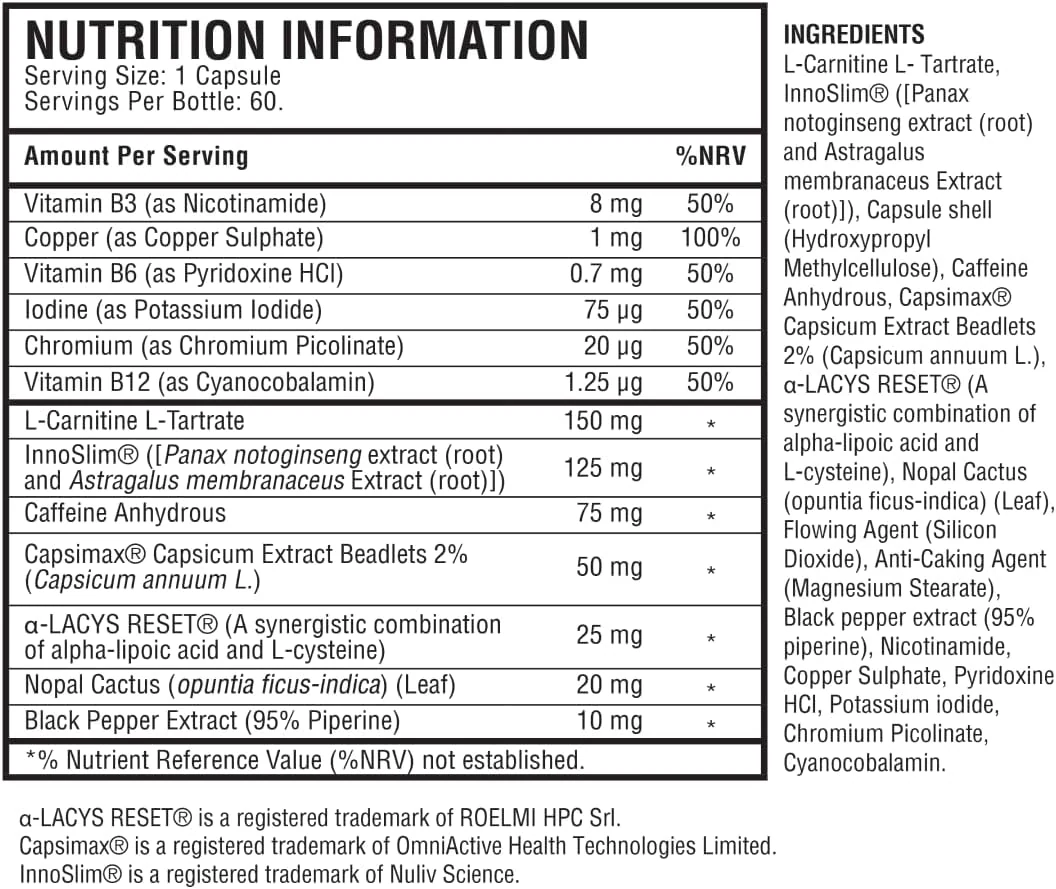
Official PhenQ label — nutrition information and the full ingredient list with per-capsule amounts
The label

The full label at a glance

Official US label, revision 1022. The daily dose is two capsules, so double each per-capsule figure.

Ingredient (per capsule)AmountDaily (×2)What the research shows at this dose
Caffeine anhydrous75 mg150 mgIn rangeWithin studied range; modest boost to energy expenditure and appetite control
Capsimax® (capsicum, 2% capsaicinoids)50 mg~2 mg capsaicinoidsIn rangeThe low end of studied intake; ~30–50 kcal/day effect in trials
α-Lacys Reset® (alpha-lipoic acid + L-cysteine)25 mg50 mgUnder-dosedBrand-funded trial only; not published in a peer-reviewed journal
InnoSlim® (Panax notoginseng + Astragalus)125 mg250 mgPartialManufacturer research; limited independent human data
L-Carnitine L-Tartrate150 mg300 mgPartialMeta-analyses show ~1.2–1.3 kg loss — at 3–10× higher doses
Nopal cactus (leaf)20 mg40 mgUnder-dosedFat-binding shown at gram-level doses, not at 40 mg
Chromium picolinate20 mcg40 mcgUnder-dosedA nutritional dose; weight-loss trials used 200–1,000+ mcg
Iodine75 mcg150 mcg (100% DV)PartialSupports normal thyroid/metabolic function — a nutritional dose
Vitamin B3 / B6 / B128 mg / 0.7 mg / 1.25 mcg16 mg / 1.4 mg / 2.5 mcgPartialNormal energy-metabolism support
Copper1 mg2 mgPartial111% DV — enzyme cofactor
Piperine (black pepper)10 mg20 mgPartialAbsorption enhancer for the other ingredients

Daily totals = 2× each per-capsule figure. Source: official US label, rev 1022. “In range / Partial / Under-dosed” compares each dose with the amounts used in the studies behind it.

Official PhenQ label — nutrition information and the full ingredient list with per-capsule amounts
Official PhenQ label — per-capsule amounts match the table above; the daily dose is two capsules, so double each figure.
Study by study

Every ingredient, study by study

Each card: the daily dose, the evidence status, and the PubMed references behind it. This is the core of the page — the rest is context.

Caffeine anhydrous

150 mg/day
Good match

A dose-response meta-analysis of 13 RCTs found caffeine intake associated with reductions in weight, BMI and fat mass (PMID 30335479). At 150 mg/day (~1.5 coffees) the effect is real but small — and regular coffee drinkers build tolerance.

Capsimax® (capsicum extract)

~2 mg capsaicinoids/day
At the studied threshold

A systematic review of 20 trials found ≈ +50 kcal/day energy expenditure and reduced appetite (PMID 22634197); a pooled analysis puts it nearer +34 kcal/day (PMID 33063385). Reviews suggest ≥ ~2 mg/day to affect intake (PMID 24246368). PhenQ sits right at that floor.

α-Lacys Reset®

50 mg/day
Headline act, weakest evidence

The famous numbers (−7.24% body fat, −3.44% weight) come from a 75-person, manufacturer-funded 2014 trial that was never peer-reviewed or PubMed-indexed. Its main component, alpha-lipoic acid, shows −1.27 kg in meta-analysis — at 300–1,800 mg/day (PMID 28295905), far above what a full daily PhenQ dose of the whole complex contains.

L-Carnitine L-Tartrate

300 mg/day
Real effect, under-dosed

Meta-analyses report −1.33 kg (9 RCTs, PMID 27335245) and ≈ −1.2 kg (37 RCTs, PMID 32359762) — mostly at 1,000–3,000 mg/day.

Chromium picolinate

40 mcg/day
Nutritional, not studied, dose

A Cochrane review found ≈ −1.1 kg, low-certainty (Tian 2013); another meta called ~1 kg “of debatable clinical relevance” (PMID 12664086). Trials used 200–1,000+ mcg.

Nopal cactus

40 mg/day
Negligible at this dose

Fat-binding was shown in a 20-person crossover at gram-level doses (PMID 25067985). 40 mg is ~2% of that.

InnoSlim®

250 mg/day
Promising, unproven

Manufacturer-sponsored research only; limited independent human weight-loss data.

Piperine

20 mg/day
Supportive

An absorption enhancer for the other ingredients; no weight claims needed.

Iodine, B3/B6/B12, copper

at DV-level doses
Supportive

Cover normal energy-metabolism needs; not weight-loss agents in well-nourished people.

Per capsule

What’s in each capsule

Every disclosed dose, straight from the label — the daily figure is double each one.

Caffeine anhydrous 75 mgCapsimax® (capsicum, 2% capsaicinoids) 50 mgα-Lacys Reset® (alpha-lipoic acid + L-cysteine) 25 mgInnoSlim® (Panax notoginseng + Astragalus) 125 mgL-Carnitine L-Tartrate 150 mgNopal cactus (leaf) 20 mgChromium picolinate 20 mcgIodine 75 mcgVitamin B3 / B6 / B12 8 mg / 0.7 mg / 1.25 mcgCopper 1 mgPiperine (black pepper) 10 mg

Source: official US label, rev 1022. Amounts shown are per capsule.

The takeaway

The pattern to notice

Two ingredients land squarely in studied ranges — caffeine (150 mg/day) and Capsimax® (~2 mg capsaicinoids/day) — with real but modest effects on energy expenditure and appetite in trials.† The vitamin and mineral support (iodine, B vitamins, copper) meets normal nutritional needs without pretending to be a weight-loss agent. We explain both mechanisms in depth in our caffeine & metabolism guide and our capsaicinoids & thermogenesis guide.

Several headline actives sit far below the amounts the cited trials used: L-carnitine at 300 mg/day versus the 1,000–3,000 mg studied, chromium at 40 mcg/day versus 200–1,000+ mcg, and nopal at 40 mg/day versus the gram-level doses in the original research. α-Lacys Reset®, the marquee ingredient, rests entirely on a manufacturer-funded trial that was never peer-reviewed. That gap between the cited science and the delivered dose is the single most useful thing to understand about this product.

What the label gets right is disclosure. Every dose is public — no proprietary blends, no fine print — which is exactly what made this page possible. Most competitors cannot be checked this way; PhenQ can, and that transparency is its most defensible feature.

If transparent dosing matters to you, PhenQ is unusually open about it — and our label-reading guide shows how to run the same check on any bottle. Check today’s official price, see how the formula performs in our evidence review, read the safety notes before you order, or compare bundle costs on the price page.

†When used alongside a calorie-controlled diet and exercise, as the brand intends.
Caffeine specifics

75 mg per capsule, 150 mg a day — about 1.5 cups of coffee. It supports energy, focus and thermogenesis, and it stacks with everything else you drink: coffee, tea, energy drinks and pre-workouts all count toward the same daily total.†

The brand advises taking the second capsule with lunch and nothing after 3 pm.

FAQ

Dose and ingredient questions

How many ingredients are in PhenQ?

Thirteen, all fully disclosed on the label with exact per-capsule doses — which is genuinely unusual for this category, where proprietary blends are the norm. The daily dose is two capsules, so every per-capsule figure doubles.

How much caffeine is in a PhenQ capsule?

75 mg per capsule, 150 mg/day total — about 1.5 cups of coffee. That is within the range studies associate with modest increases in energy expenditure (PMID 30335479).

What is α-Lacys Reset®?

The trademarked headline ingredient: a complex of alpha-lipoic acid and L-cysteine at 25 mg per capsule (50 mg/day). Its famous −7.24% body-fat claim comes from a 75-person, manufacturer-funded 2014 trial that was never peer-reviewed. Alpha-lipoic acid itself shows −1.27 kg in meta-analysis, but at 300–1,800 mg/day (PMID 28295905) — far above what PhenQ contains.

Is the PhenQ formula vegan-friendly?

Yes — the capsules are vegan-friendly and made in GMP-certified facilities, according to the brand and the official label.

Why is the L-carnitine dose a problem?

PhenQ provides 300 mg/day, but the meta-analyses reporting −1.2 to −1.33 kg used 1,000–3,000 mg/day (PMIDs 27335245, 32359762) — 3–10× higher. The effect is real; the dose is not there.

Does the label hide anything?

No — that is PhenQ’s best feature. Every dose is public, which lets you do exactly this kind of dose-vs-evidence check. Many competitors hide behind proprietary blends.

If transparent dosing matters to you…

PhenQ is unusually open about it — every dose printed, nothing hidden. The full label and the current price are one click away.

Check Today’s Official Price

Commission link — it never changes our verdict.